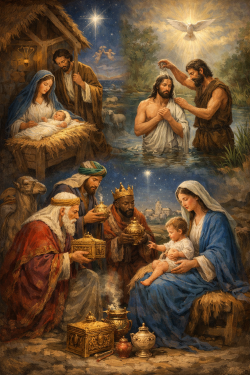
Epiphany is a major Christian feast that celebrates the manifestation (revelation) of Jesus Christ to the world. The word Epiphany comes from the Greek “Epiphaneia”, meaning appearance or revelation.
📜 Historical Background
- Origin (3rd–4th Century):
Epiphany began in the Eastern Christian Church around the 3rd century. Initially, it commemorated three events together:- The birth of Jesus
- The visit of the Magi (Wise Men)
- The baptism of Jesus in the River Jordan
- Development in the West:
By the 4th century, the Western Church (Rome) separated Christmas (25 December) and Epiphany.- Christmas focused on Jesus’ birth
- Epiphany (6 January) focused mainly on the visit of the Magi, symbolizing Jesus’ revelation to the Gentiles (non-Jews)
🌟 Biblical Significance
- The story of Epiphany is described in the Gospel of Matthew (2:1–12).
- The Three Wise Men (Melchior, Caspar, and Balthazar) followed a star to Bethlehem and offered:
- Gold – Kingship of Christ
- Frankincense – Divinity of Christ
- Myrrh – Suffering and death of Christ
This event shows that Jesus came not only for Jews, but for all humanity.
🌍 How Epiphany Is Observed
- Date: 6 January
- Western Christianity: Focus on the Magi
- Eastern Orthodox Churches: Focus on the Baptism of Jesus (also called Theophany)
- Traditions:
- Blessing of homes and water
- Epiphany cakes
- Processions and church services
✝️ Spiritual Meaning
Epiphany reminds Christians that:
- Jesus is the Light of the World
- God reveals Himself to all people
- Faith is a journey, just like the journey of the Wise Men