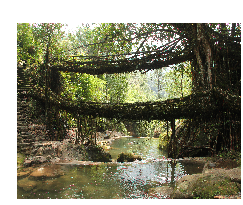
📌 Where are they found?
Living Root Bridges are found mainly in the Meghalaya state of India, especially in the Khasi and Jaintia Hills. The local tribes here – Khasi and Jaintia – developed this amazing tradition.
📜 Historical Background
✔ 1. Tradition hundreds of years old
The history of living root bridges goes back over 500–600 years. No exact written record exists because the Khasi and Jaintia tribes passed their knowledge orally from one generation to the next.
✔ 2. Why were they built?
Meghalaya receives some of the highest rainfall in the world. Due to heavy rain:
- Wooden bridges rotted quickly
- Bamboo bridges were washed away
- Rivers would swell and become dangerous
So, the tribes developed a natural solution — bridges made out of the living aerial roots of the Ficus elastica (rubber fig tree). These roots grow stronger over time, unlike wood or bamboo.
✔ 3. How they were made?
The community guided the young roots of rubber trees across rivers using:
- Bamboo scaffolding
- Hollowed-out betel trunks
- Stones or sticks for support
Over 15–20 years, the roots naturally thickened, intertwined, and formed a strong bridge.
✔ 4. Part of their cultural identity
For the Khasi people, these bridges are:
- A symbol of harmony with nature
- A community effort—villagers work together
- A part of their traditional ecological knowledge
Some bridges are over 100–150 years old and still in use.
🌉 Famous Living Root Bridges
- Double-Decker Bridge, Nongriat – the most famous one
- Riwai Village Bridge
- Mawlynnong Bridge
- Nongthymmai Bridge
🌱 Why they are unique
- They are alive, not built
- They become stronger as they age
- Can last 500 years
- Can hold 50+ people at a time
- Are an example of sustainable engineering